
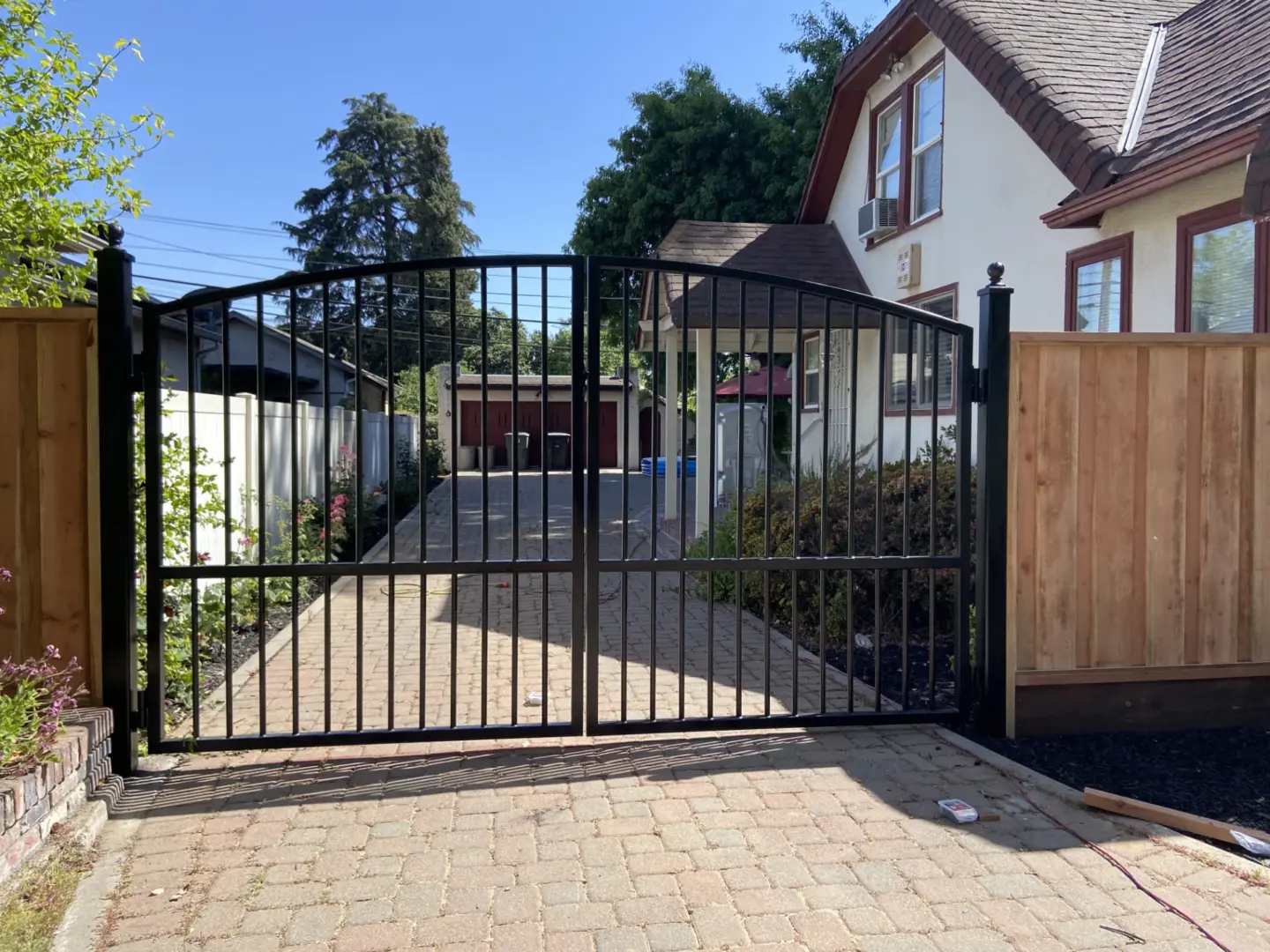
Planning a gate installation raises practical questions for most homeowners and property managers. What happens between the initial call and the finished product? How long does it take? What decisions need to be made along the way? Understanding each phase of the process removes uncertainty and helps property owners prepare for the work ahead.
The Project Starts with a Consultation and Design Review
Before any materials are ordered or work begins on site, the project begins with a consultation and design phase. This covers gate style, materials, dimensions, and how the gate connects to the existing fence line or property perimeter. Residential options include swing gates, slide gates, cantilever gates, bi-fold gates, pedestrian gates, decorative gates, and retractable gates. Commercial projects extend to vertical pivot gates, barrier arm gates, rolling gates, chain link gates, and wire mesh gates. Getting this phase right determines how well the finished gate functions and holds up over time.
Permitting Is Part of the Process
Gate installation in most jurisdictions requires a permit, particularly for gates that exceed certain height thresholds or are attached to structures. Permitting assistance helps keep the project moving and reduces the administrative burden on the property owner. Skipping this step creates problems down the line, including fines and removal orders, so it gets addressed before fabrication or site work begins.
Fabrication and Material Selection Come Next
Once design and permitting are settled, gates are either fabricated to specification or procured from a supplier. Available materials include aluminum, wood, vinyl, chain link, and composite, giving property owners meaningful flexibility in how the finished gate looks and how it performs across seasons. Material selection affects weight, maintenance demands, resistance to corrosion, and visual style. Aluminum suits properties where low maintenance and longevity are priorities. Wood works well where a natural appearance fits the surrounding landscape or architecture. Each material choice gets matched to the specific gate style and property conditions.
Site Preparation Determines How Well the Gate Performs
Gate installation depends on proper ground preparation and post setting. Posts carry the entire load of the gate, so their depth, spacing, and anchoring method affect how the gate swings, slides, or rolls over years of regular use. Site preparation includes excavation and post installation according to the specifications required by the gate style and soil conditions in the area. Cutting corners at this stage results in sagging, binding, or premature failure, which is why it is important to get it done correctly the first time.
Safety Features Get Installed as Part of the Build
A functional gate needs more than just the gate itself. Safety features such as self-closing mechanisms, latch systems, and appropriate clearances are built into the installation from the start. For pool fences and residential properties with young children, these features carry particular importance since they directly affect compliance with local safety codes. Safety feature installation should be considered a standard part of the process rather than an afterthought.
Customization Options Extend What a Gate Can Do
Gate installation does not end with a functional swinging or sliding structure. Customization and upgrades allow property owners to match the gate to the surrounding fence, add decorative elements, or modify dimensions to accommodate vehicles, equipment, or specific entry widths. Whether the goal is a decorative residential gate that complements a wood or ornamental aluminum fence, or a commercial-grade rolling gate built for high-frequency use, the finish work brings the installation in line with how the property actually functions.
Maintenance and Repair Support Keeps the Gate Working Long-Term
Once a gate is installed and in use, regular maintenance helps keep it operating correctly. Services may include inspection, repair of damaged components, and replacement of hardware that wears over time. Addressing small issues early prevents larger structural problems and extends the service life of the gate. Training and support may also be available so property owners understand how the gate operates and what to watch for between service visits.
Contact Tom’s Mulch Fence and Deck
Ready to get started? Contact Tom’s Mulch Fence and Deck to schedule a consultation and discuss the right gate installation for your property.
Tom’s Mulch Fence and Deck
2107 Ferry Rd, Sugarcreek Township, OH 45305
+1 (937) 426-8300